Decades of evolution
Adbuka — the privacy revolution
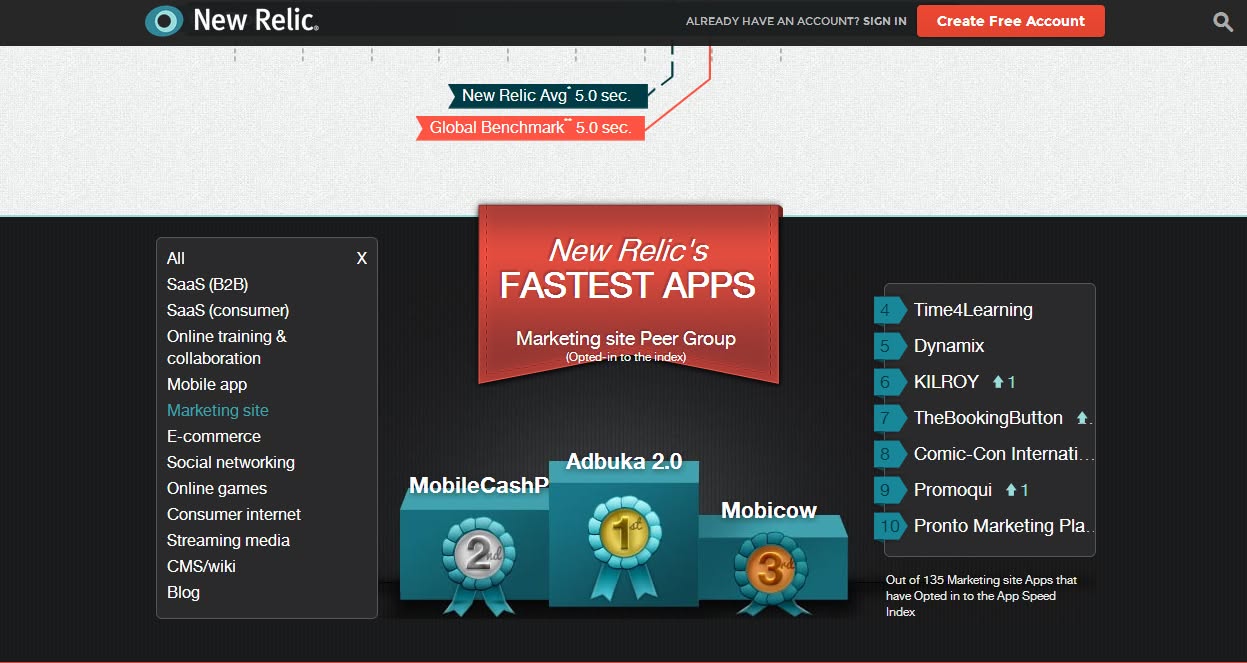
We built the world's first on-demand advertising network: users chose what they wanted to see, instead of being tracked without knowing it. Two intentionally separated databases meant behavioral data was never linked to identity — privacy-by-design, five years before GDPR made it law. Adbuka reached 1 billion ad impressions per month, expanded through a franchise license sold in Croatia, and was, for three consecutive months, the fastest-loading marketing platform globally per New Relic's App Speed Index.
Brandnumber was the predecessor to VoilàIQ
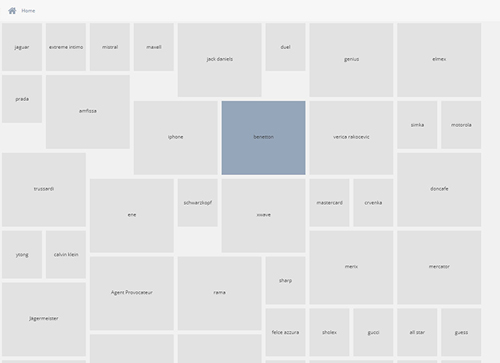
While running Adbuka, we ran a stealth project nobody outside the team knew existed: a brand-signal extraction engine using Porter stemming and lemmatization to identify brand mentions in unstructured text. It worked — years ahead of the market. But the market wasn't ready: no LLMs, no infrastructure to scale it. So it stayed internal, a proof of concept waiting for the world to catch up.
Ten years of hard data problems
Between BrandNumbers and VoilàIQ we built complex systems for clients: automatic categorization, demanding spatial applications, cleaning noisy GPS signals, fintech. Different industries, one common thread: turning messy, unreliable data into something you can trust.
VoilàIQ — signal meets scale
After a decade of solving those problems, BrandNumbers was reborn with the technology finally in place: neuro-symbolic AI, a three-layer engine (Sens, Lumière, Stratège), vector embeddings, graph reasoning, and reports that check their claims against the data, remove what it does not support and rate their confidence section by section. The technology evolved. The foundations stayed: privacy-by-design, signal extraction over guessing, transparency over black boxes.
Why now?
The team could have launched VoilàIQ in 2018, 2020, or 2022. They waited because the technology had to be right (vector databases, graph reasoning, LLM routing), the team had to be ready (bringing in an expert partner to train our models and reasoning), and the market had to be disillusioned with ChatGPT wrappers calling themselves "AI solutions." Now all three conditions are met.